
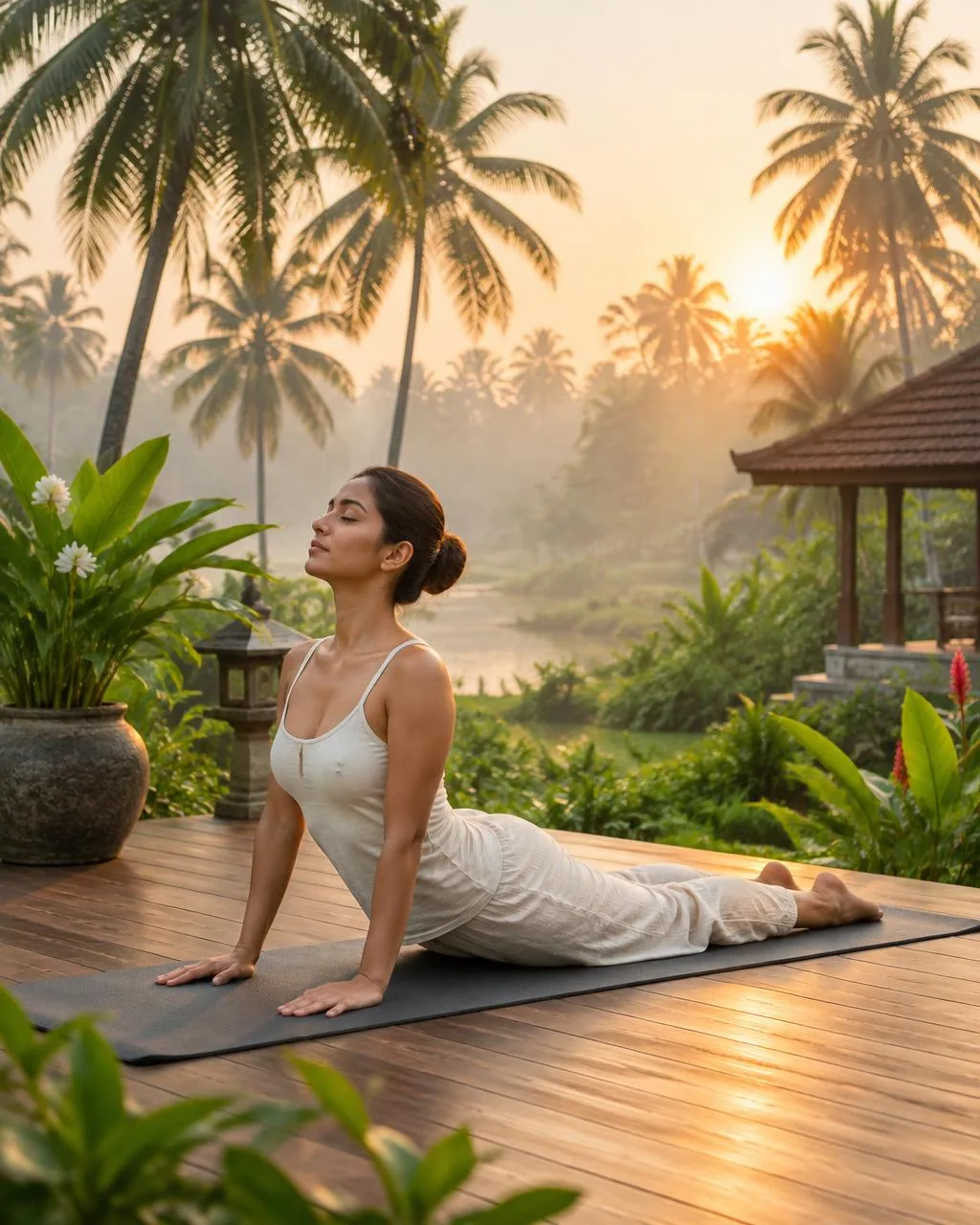
Yoga & meditation

A practice of coming back to yourself.

Movement without competition. Breathing without hurry. Meditation without the pressure to empty your mind — all in the tropical quiet of Kerala.

What yoga means

More than the postures

Yoga originated in ancient India. The word is commonly linked to the Sanskrit root yuj, meaning to join or yoke, and is often understood as a practice of connection: movement with breath, body with attention, and daily action with a wider sense of purpose.

Classical yoga includes ethical reflection, physical postures, breathing, concentration and meditation. The familiar studio class is therefore only one part of a much broader tradition. You can enter through movement, stillness or simple curiosity; there is no single correct starting point.

Meditation is equally misunderstood. It is not a test of whether you can stop thinking. It is the repeated act of noticing where your attention has gone and gently returning. A busy mind does not disqualify you. For many people, it is the very reason to begin.

You do not need to become a different person before you arrive. The practice begins with the body, mind and life you already have.

The practice, explained

Four ways yoga holds your attention.

These connected elements turn yoga from exercise into a wider practice. A retreat may draw on several of them without making the experience technical or demanding.

Asana — movement

The physical postures are the most familiar part of yoga. They can build awareness of strength, mobility and alignment, but they are not a performance. Props, rest and adaptations are part of an intelligent practice.

Pranayama — breath

Traditional breathing practices give attention a simple anchor. Sessions should be gentle and guided; more demanding techniques are not necessary for a meaningful first experience.

Pratyahara — turning inward

Often described as a withdrawal of the senses, Pratyahara is the practice of becoming less pulled by every sound, screen and demand. A retreat setting makes that shift feel natural rather than forced.

Dhyana — meditation

Meditation is a sustained practice of attention. Thoughts do not need to disappear; you learn to notice them without following every one. Guidance makes this approachable for beginners.

What you may practice

Choose depth without choosing pressure.

Experiences depend on the final retreat and instructor. Each can be adapted, and you remain free to rest, observe or opt out.

Hatha yoga

An unhurried approach to classical postures, with time to understand alignment and breathe. Rather than rushing through a sequence, you can become familiar with each position and choose the variation that suits you.

Gentle and restorative yoga

Supportive, accessible movement and longer periods of rest. Bolsters, blankets and other props may help the body settle without strain. You do not need to be flexible, athletic or experienced.

Pranayama

Guided breathing practices with attention to comfort and ease. A few quiet minutes can become a ritual you take home: no equipment, perfect setting or previous experience required.

Guided meditation

A teacher offers an anchor such as the breath, bodily sensations or sound. When attention wanders, you simply begin again. That returning is the practice, not a sign that you are doing it badly.

Yoga Nidra

Often called yogic sleep, this is a guided practice usually experienced lying down. You remain comfortably supported while following spoken instructions, with no postures to learn and nothing to achieve.

Mindfulness in daily life

Attention can be practiced while drinking tea, walking through a garden or listening to rain. These ordinary moments help meditation become part of the day rather than another task on the schedule.

An illustrative retreat rhythm

A day that no longer feels like a list.

The exact schedule will be agreed before booking. This example shows how practice and free time can support one another rather than compete for space.

  1. Early morning

    Move before the world asks anything of you

    An illustrative start: gentle postures in an open pavilion, followed by guided breathing and breakfast. The point is not an impressive workout; it is beginning the day at your own pace.

  2. Afternoon

    Let the practice become rest

    Time outdoors, a quiet meal or an optional Yoga Nidra session. Nothing needs to be squeezed between calls, and there is no requirement to fill every hour.

  3. Evening

    Learn how to end a day

    Meditation, soft light and fewer screens can create a clear close to the day. Instead of carrying work into the night, you can let attention return to where you are.

Why it matters

Something you can take home without packing it

A beautiful setting can help you begin, but the lasting value lies in simple practices you understand well enough to repeat: a few comfortable postures, a gentle breathing exercise, or five minutes of attention before opening your laptop.

Many people find that regular yoga and meditation support flexibility, balance and relaxation, and help them manage stress or sleep more deeply. These are potential wellbeing benefits, not medical promises. Everyone's experience is different, and yoga is not a substitute for medical care.

This is time you are allowed to protect

There will always be another message, deadline or favour asking for your attention. A retreat creates a rare boundary around your time. Not so you can return ready to do even more, but so you can remember what it feels like when your days contain genuine space.

Where yoga sessions are offered, they should be delivered by suitably qualified instructors who adapt the practice to participants. Tell the instructor about relevant injuries or health concerns, avoid forcing postures or breathwork, and seek medical advice when appropriate.

Begin where you are

Let your next achievement be a little stillness.

Request an invitation for first access to our small-cohort retreats, with a one-to-one conversation to shape the practice and pace around you.